Most leaders don’t avoid tough conversations because they lack courage. They avoid them because they don’t feel equipped to handle them.
Since my last carousel exploded on LinkedIn, I’ve read the comments, messages, and DMs… and a clear pattern is emerging. I’ve sent our countless one-page manager’s guides and am now developing a full-on Feedback Guide for Leaders.
Add your information in the contact us section if you want a copy when it’s ready.
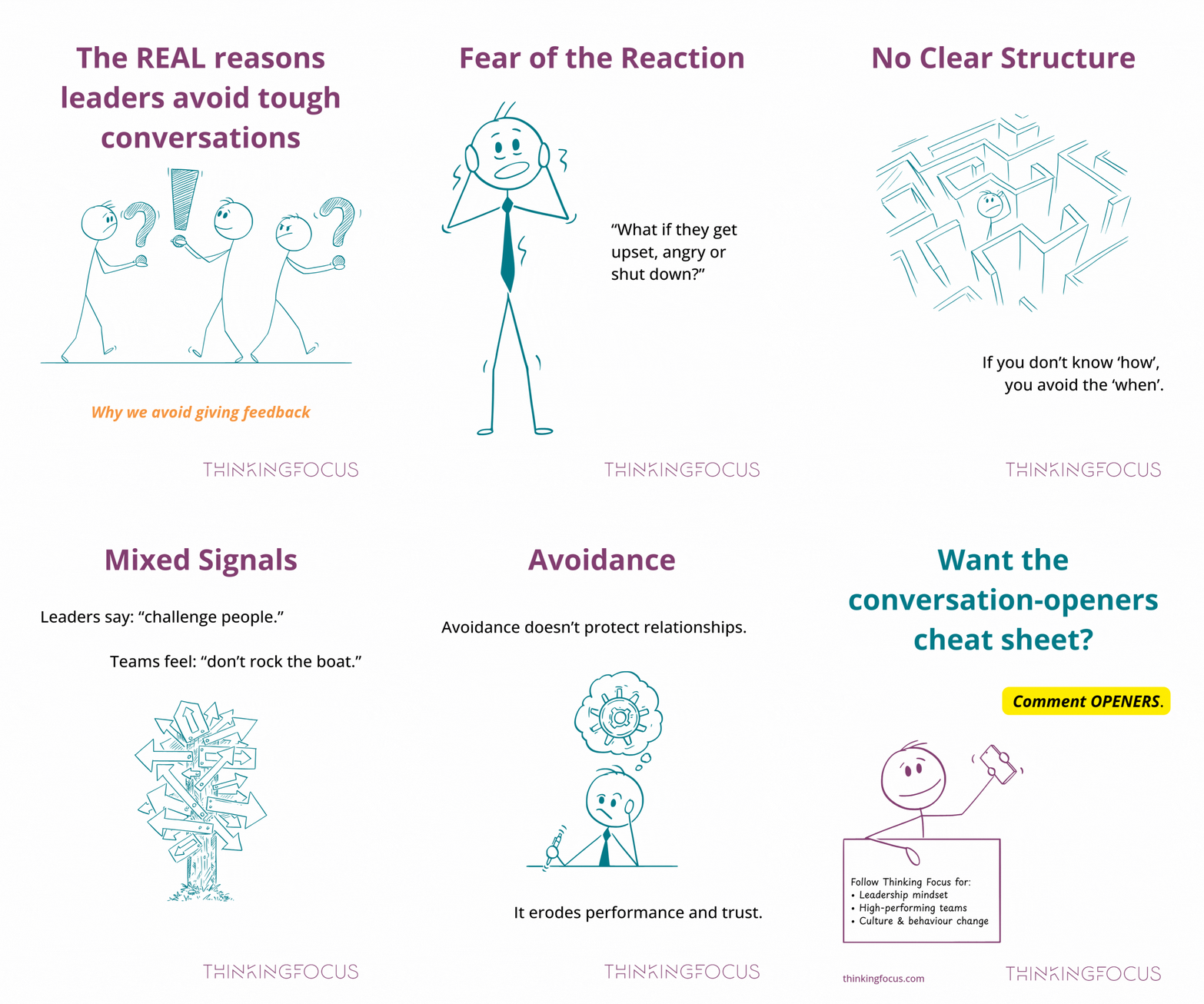
Here are the 5 real reasons leaders avoid behavioural feedback:
1️⃣ Fear of the reaction “What if they get emotional, upset, angry, or shut down?”
2️⃣ Fear of getting it wrong “I don’t want to make it worse.”
3️⃣ Not having a clear model or structure When you don’t know how to have the conversation, you avoid it.
4️⃣ Mixed cultural signals Leaders say: “Challenge people.” Teams feel: “Don’t rock the boat.”
5️⃣ Past experience One messy conversation years ago is enough to create hesitation now.
Here’s the truth:
Avoidance doesn’t protect relationships. It erodes performance, trust and engagement.
To help leaders and managers take that difficult first step and get the conversation started, we’ve created a cheat sheet with 7 ways to open the conversation. We share it with them in workshops to add to their toolkit.
Coaching can be one of the most rewarding conversations you ever have with someone — even when it starts with a call out of the blue asking for help.
One of the toughest things leaders face is giving behavioural feedback to someone who has fallen short of the standard. And often, you’re only giving it because everyone else has ducked the job.
Not because they don’t care — but because they don’t have the skills, the confidence, or the nerve to handle whatever reaction comes back.
I get it. I’m usually the one people call when the conversation feels too big or too risky. I know what it’s like to deliver the message others are scared to give… and I know what it’s like to take someone who reacts badly and help them become a high-performing leader.
So when an HR Director rang to sense-check how they should tackle a difficult team leader — someone creating pressure, fear, and a steady stream of people eyeing the exit — I was happy to help.
No one should feel like that at work.
Here’s what I shared with them.
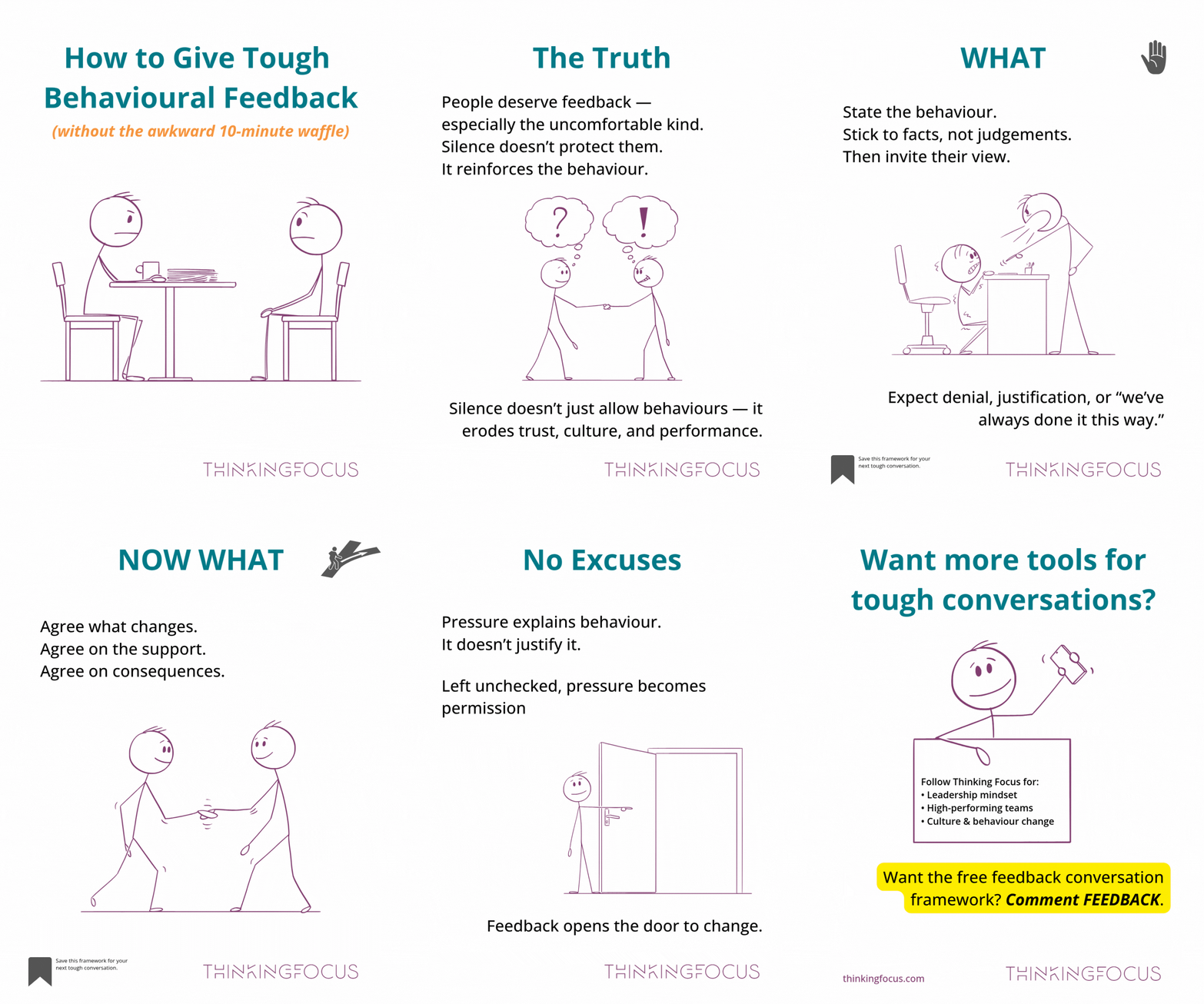
1. People deserve feedback — even the uncomfortable kind.
Don’t dance around it.
Tell them upfront you have feedback they’re not going to like. That honesty is kinder than ten minutes of waffle.
2. Use “What, So What, Now What” — simple and effective.
WHAT: Stick to specifics and facts, not judgments.
Then invite their view. Expect denial, justification, or “that’s how we’ve always done it.”
If no one has ever challenged them before, of course, they think it’s OK.
You promote what you permit.
SO WHAT: Explain the impact. Poor behaviour doesn’t stay contained — it drives disengagement, withdrawal, and anonymous resignations. Someone else inherits the mess, and the cycle continues.
NOW WHAT: Agree on what needs to change and what happens if it doesn’t.
A few weeks later, I checked in. The HR Director said the conversation didn’t feel great, but it was absolutely necessary.
And here’s the twist: the team leader was under huge pressure and didn’t realise the effect they were having. They’d operated like this for years because no one had ever stopped them.
Top performers often get a free pass because leaders fear losing their output.
We create stories that justify our inaction.
Yes, there were mitigating factors — but never excuses.
Feedback opened the door for this person to ask for support, seek help, and commit to changing.
And here’s the important bit:
A single conversation doesn’t transform ingrained habits. Especially ones we’ve allowed to calcify through silence.
But it does create a catalyst.
If you want that change to stick:
• Support them consistently
• Reset expectations with the team
• Give the team permission to hold their leader to account
• Ensure the leader has an outlet — a safe space to vent and process pressure
Because isolation makes pressure heavy. And pressure makes behaviour worse.
Real leadership isn’t avoiding the hard message.
It’s delivering it with honesty, clarity, and humanity — and sticking around to help someone become who they want to be.
In today’s intricate world, decision-making and learning often occur in ambiguous contexts where clear-cut answers are rare. This article delves into the complexities of navigating these “grey areas,” emphasising the importance of critical thinking, ethical reasoning, and adaptability. It highlights how social contexts and cultural influences shape our perceptions and decisions, underscoring the need for continuous learning and cultivating environments that encourage open dialogue and diverse perspectives.
Not all lessons are black and white in the vast expanse of learning and development. Much of what we learn, especially in leadership, management and personal growth, lies in grey areas—complex, nuanced and often without clear-cut answers.
How, then, do you train and develop your people to work in the grey zones when a flowchart, manual, process, or, dare I say it, artificial intelligence (AI) can’t cut it? Not yet, at least.
Serendipity piqued my curiosity, leading me into the world of social learning theory.
A Chance Encounter Inspires A Challenge
When a global automotive manufacturer challenged my company to think differently and to look at a learning problem from another perspective, we had to embrace the opportunity.
The challenge was to address a development gap in their frontline people managers; while skilled and competent in the technical and process aspects of the role, they needed to be more effective in their soft skills. The need was to be able to have impactful people conversations that changed behavior. Challenges where the stock answer is “It depends” are not the happy place for managers who would sooner fix a technical issue than talk to their people. Of course, there were operational constraints and budgetary limits, too.
We train, develop and coach people worldwide for some of the biggest brands, but this needed a new solution, something like gamification. At that time, it was not at all in our sweet spot. So we set about doing our research.
We created a dilemma game for them, one that blended four distinct components:
Gamification to motivate and maintain interest;
Psychological safety to enable participants to feel comfortable surfacing issues or exposing perceived weaknesses (the game element also helps this);
Group coaching, where a facilitator runs the game and asks great questions to cause conversation, exploration and curiosity; and finally,
Social learning, encouraging people to share their experiences, good and bad, for the benefit of the group, all under the pretext of “It’s only a game.”
Players shared more than we ever imagined, and managers grew, not just in learning but in recognising that they are not the only ones who struggle. Additionally, they built an internal support network they can talk to when needed.
The Essence Of Social Learning
Social learning is at the heart of understanding how we navigate the grey areas.
Psychologist Albert Bandura, professor emeritus of social science in psychology at Stanford University, popularised the theory. Bandura suggests that people learn from one another via observation, imitation and modelling.
One of Bandura’s most famous experiments, the Bobo doll study, demonstrated how individuals, particularly children, learn and replicate behaviours they observe in others.
This fundamental concept illuminates the significant impact of environmental and social influences on our learning processes and decision-making abilities. Where you work and who you work with significantly impact what you learn.
Learning From The Environment: The Role Of Observational Learning
From early childhood, our learning is deep-rooted in observation. We watch the actions of those around us—our parents, teachers, and peers—and see the consequences of those actions.
This observational learning extends beyond mere replication of behaviours. It involves understanding the outcomes of actions and adjusting our behaviour in response.
When we witness positive results, we are encouraged to mimic those actions. Conversely, adverse outcomes might deter us but can also pique curiosity and imitation under certain circumstances.
This dynamic interaction with our environment shapes our understanding of the world, especially in areas where the answers could be more straightforward.
The Grey Areas: Navigating Complexity Through Social Contexts
The grey areas of decision-making and ethics represent a significant challenge for personal development and professional training. These are the domains where right and wrong are not easily discernible, where the ethical, practical and effective course of action might vary depending on context and perspective.
Training individuals to navigate these complexities requires a sophisticated approach beyond traditional didactic methods. How you get an answer becomes a more important skill than knowing the answer.
Creating realistic and contextual situations for discussion and exploration is critical. By simulating real-life scenarios that present ethical dilemmas or complex decision-making situations, learners can engage in critical thinking, explore different outcomes and consider the implications of various actions.
This experiential learning approach encourages individuals to reflect on their values, the influence of their actions on others and the broader societal implications.
The Impact Of Peers And Culture
Our peers and the culture we are a part of play crucial roles in shaping our responses to grey areas. The social norms, values and behaviours are prevalent in our immediate environment influence our perceptions of what is acceptable or desirable.
This social context can either reinforce positive behaviors or perpetuate negative ones. Recognizing the power of social influence is crucial for both learners and educators, as it highlights the importance of fostering positive, supportive and ethical communities.
Moving Toward A Future Of Informed
Decision-Making
Training for the shades of gray requires an emphasis on critical thinking, empathy and ethical reasoning. It involves cultivating an environment where questioning is encouraged and diverse perspectives are valued.
By leveraging social learning principles, educators and leaders can create more nuanced training programs that prepare individuals not just to choose between black and white but to navigate the vast spectrum of grey created by current levels of uncertainty with confidence and integrity.
Our Solution
What Would You Do? helps cross-functional groups surface common issues and performance gaps through social learning, gamification, group coaching and psychological safety. You can learn more here.
Conclusion
In a complex and nuanced world, navigating the grey areas is more crucial than ever. Understanding and applying social learning principles can better prepare us and others to make informed, ethical and impactful decisions.
By observing, discussing and reflecting on the multifaceted outcomes of our actions, we grow as managers and leaders, ready to face the challenges of tomorrow with wisdom and compassion.
This article first appeared on Forbes.com on 15th April 2024
Ricky has been a regular contributor to the Forbes Councils since 2023, where he shares his perspectives on all things leadership, change, culture and productivity, all with Thinking Focus’ unique perspective on metacognition, or as we prefer to say, thinking about thinking.
Do you want to know how to deliver feedback effectively at work?
In this video, we will share with you five tips on how to deliver effective feedback that will be respectful and helpful to you and your employees.
Learning how to deliver feedback effectively is essential if you want to be a successful manager of people! We’ll show you how to deliver feedback to help your employees grow and learn. We’ll also discuss the importance of feedback in the workplace and give you some helpful tips on how to give feedback effectively!
Do you know how to make your performance chats easy every time?
All managers love it when they have to give great feedback; that’s easy, providing it’s purposeful that is! However, many managers struggle to hold people accountable during routine feedback or performance meetings. Managers ruminate ahead of giving feedback, catastrophising the team member’s reactions. So they sugarcoat the message, which has no impact and, guess what, leads to no uplift in performance or change in behaviour.
There is a way to make it easier: developing a psychological contract, or as we call it, the expectations chat. This chat aims to establish how the line manager and team members can get the best out of each other, which means giving feedback. So why not agree upfront on how you do that and get the two-way permission agreed upon while there are no issues in the relationship?
In this video, we share a simple four-step process that will make every performance chat easy and straightforward every time.
In this video, Ricky Muddimer, a member of the Forbes Coaching Council, shares his coaching tips. Whatever your coaching approach, Executive, Business, or Performance coaching, you will recognise that coaching is one of the most valuable and impactful tools in a line manager’s armoury.
Ricky is an executive coach who spends time helping leaders worldwide get out of their own way. This video explores – ‘What is the art of great coaching?’ Discover his top three tips for all coaches. Have a look-see and find out for yourself.
Ever wondered how to change culture? It’s all about the choices we make in those moments of truth!
In this video, we unpack how one client used a social learning experience blended with gamification, group coaching and psychological safety to create a safe learning space. We brought together a multi-level audience to discuss how they would handle different situations. It was only when team members felt secure that they said what they really felt, exposing knowledge gaps, lack of confidence and doubts about what to do when under pressure.
Our favourite quote came from a junior team member who, in a multi-level audience of 40 people, asked “I know we all have said we’d do the right thing, but can someone tell me what that looks like?” The virtual room fell silent. This one example led to one of the most productive discussions we had.
By learning from your successes and failures, you can create a culture that is conducive to success. Learn how social learning can help you transform your organisation’s culture.
We work with organisations worldwide; in this video, we share how Lowell Financial Group used ‘What Would You Do?’, to embed the FCA Conduct Rules, helping 100% of participants feel confident to apply the rules in their job. What Would You Do? is the perfect learning solution for learning professionals looking to spice up their short-burst learning interventions.
We created What Would You Do? in response to a client looking for something different, engaging, high impact and can be run internally at a moment’s notice. We build a social learning experience that brings cross-functional groups together online or face-to-face to discuss everyday dilemmas faced in the workplace. When team members are uncertain or lack confidence, the last thing you need is them guessing or unintentionally placing your business and/or people at risk.