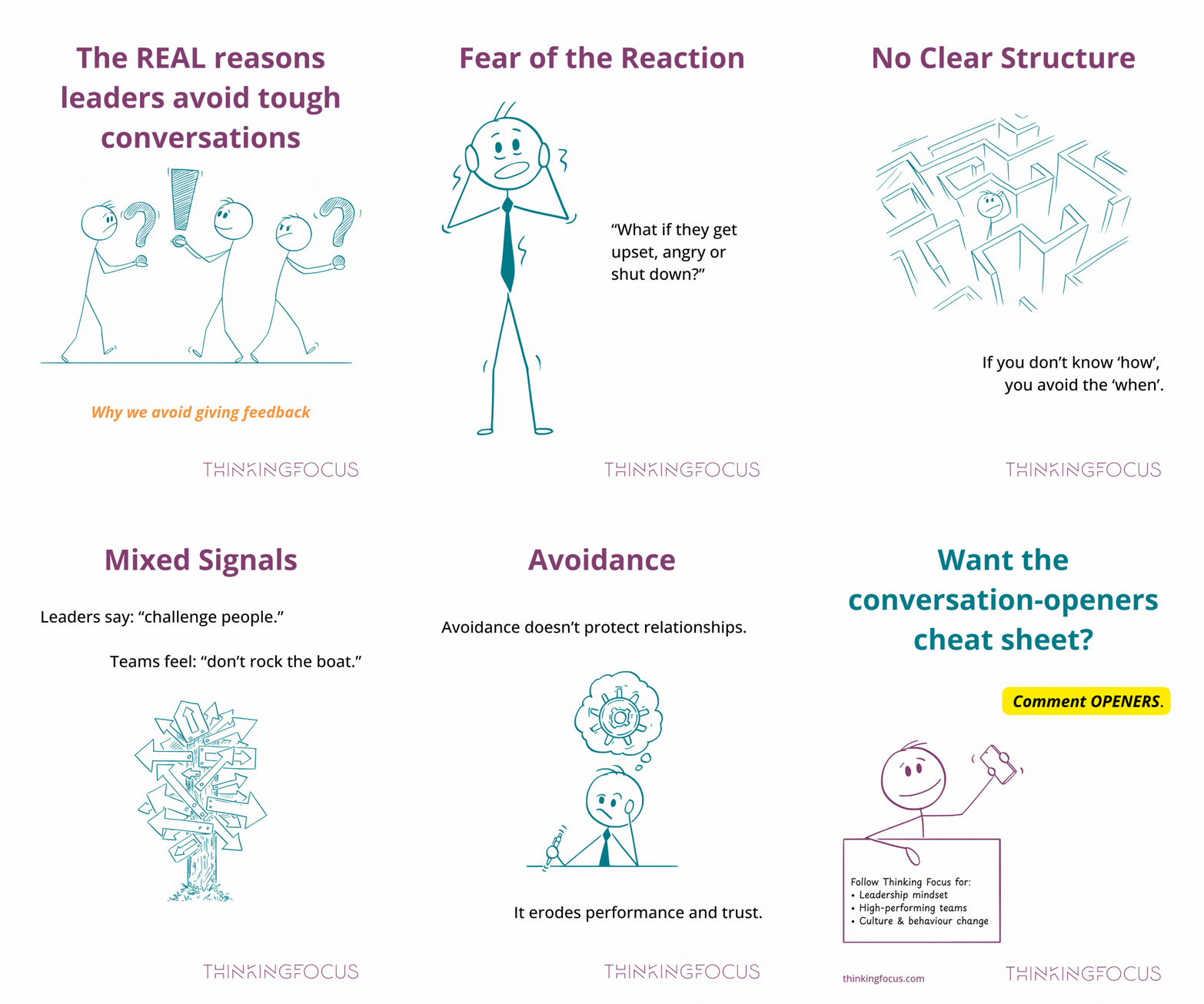
Most leaders don’t avoid tough conversations because they lack courage. They avoid them because they don’t feel equipped to handle them.
Since my last carousel exploded on LinkedIn, I’ve read the comments, messages, and DMs… and a clear pattern is emerging. I’ve sent our countless one-page manager’s guides and am now developing a full-on Feedback Guide for Leaders.
Add your information in the contact us section if you want a copy when it’s ready.
Here are the 5 real reasons leaders avoid behavioural feedback:
1️⃣ Fear of the reaction “What if they get emotional, upset, angry, or shut down?”
2️⃣ Fear of getting it wrong “I don’t want to make it worse.”
3️⃣ Not having a clear model or structure When you don’t know how to have the conversation, you avoid it.
4️⃣ Mixed cultural signals Leaders say: “Challenge people.” Teams feel: “Don’t rock the boat.”
5️⃣ Past experience One messy conversation years ago is enough to create hesitation now.
Here’s the truth:
Avoidance doesn’t protect relationships. It erodes performance, trust and engagement.
To help leaders and managers take that difficult first step and get the conversation started, we’ve created a cheat sheet with 7 ways to open the conversation. We share it with them in workshops to add to their toolkit.
Coaching can be one of the most rewarding conversations you ever have with someone — even when it starts with a call out of the blue asking for help.
One of the toughest things leaders face is giving behavioural feedback to someone who has fallen short of the standard. And often, you’re only giving it because everyone else has ducked the job.
Not because they don’t care — but because they don’t have the skills, the confidence, or the nerve to handle whatever reaction comes back.
I get it. I’m usually the one people call when the conversation feels too big or too risky. I know what it’s like to deliver the message others are scared to give… and I know what it’s like to take someone who reacts badly and help them become a high-performing leader.
So when an HR Director rang to sense-check how they should tackle a difficult team leader — someone creating pressure, fear, and a steady stream of people eyeing the exit — I was happy to help.
No one should feel like that at work.
Here’s what I shared with them.
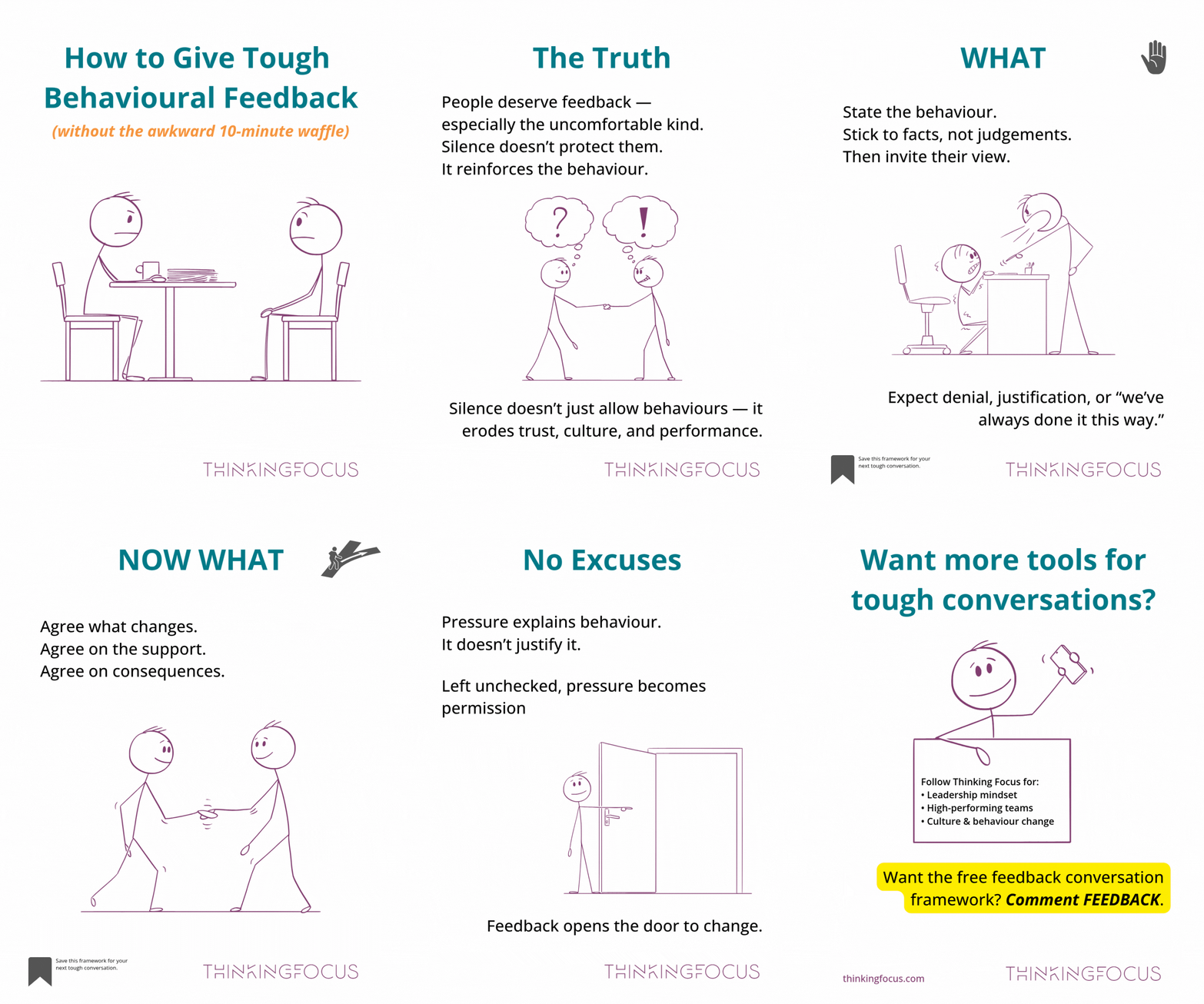
1. People deserve feedback — even the uncomfortable kind.
Don’t dance around it.
Tell them upfront you have feedback they’re not going to like. That honesty is kinder than ten minutes of waffle.
2. Use “What, So What, Now What” — simple and effective.
WHAT: Stick to specifics and facts, not judgments.
Then invite their view. Expect denial, justification, or “that’s how we’ve always done it.”
If no one has ever challenged them before, of course, they think it’s OK.
You promote what you permit.
SO WHAT: Explain the impact. Poor behaviour doesn’t stay contained — it drives disengagement, withdrawal, and anonymous resignations. Someone else inherits the mess, and the cycle continues.
NOW WHAT: Agree on what needs to change and what happens if it doesn’t.
A few weeks later, I checked in. The HR Director said the conversation didn’t feel great, but it was absolutely necessary.
And here’s the twist: the team leader was under huge pressure and didn’t realise the effect they were having. They’d operated like this for years because no one had ever stopped them.
Top performers often get a free pass because leaders fear losing their output.
We create stories that justify our inaction.
Yes, there were mitigating factors — but never excuses.
Feedback opened the door for this person to ask for support, seek help, and commit to changing.
And here’s the important bit:
A single conversation doesn’t transform ingrained habits. Especially ones we’ve allowed to calcify through silence.
But it does create a catalyst.
If you want that change to stick:
• Support them consistently
• Reset expectations with the team
• Give the team permission to hold their leader to account
• Ensure the leader has an outlet — a safe space to vent and process pressure
Because isolation makes pressure heavy. And pressure makes behaviour worse.
Real leadership isn’t avoiding the hard message.
It’s delivering it with honesty, clarity, and humanity — and sticking around to help someone become who they want to be.
In this episode of The Question, Ricky and Graham continue from episode 147, exploring the impact of constant change on teams.
The modern world of work is one of constant evolution, which, for some, can be a great opportunity. Still, for many, it feels relentless, risking creating change fatigue in the people you rely on to make the change work.
Change is a mixture of practical and people outcomes, and leaders can easily focus on the practical deliverables, leaving the people to transition to the change on their own. Graham and Ricky explore the practical things that managers and leaders can do that will help people move from surviving change to embracing the opportunities that change presents.
Sometimes, it feels like the workplace has become a place of constant change, with technology, economics and societal changes driving the need for teams to adapt how they work to meet changing needs constantly. Leaders who can help their teams embrace new ideas and working practices can drive the performance of their teams while at the same time protecting those they work with from the stress we feel when change is imposed on us.
In this episode of The Question Is, Ricky and Graham explore the leader’s role in preparing their team in advance, creating a culture where change is embraced, not fought. They offer simple, practical steps, from explaining the change’s purpose to creating a clear vision of how the new ways of working will actually work. If you have teams that are experiencing change, this podcast will help you help them.
We like to think that all the teams in our organisation are aligned, collaborating effectively, and working in harmony. In an ideal world, all of our teams’ passion and energy would be combined against the external world, beating competitors and solving problems that get in the way.
In reality, under pressure, we often turn on the groups closest to us. Not because they are the problem but because they are visible and identifiable. It is hard to blame people we can’t identify, so we find an ‘enemy’ we can name, which can be as simple as the team down the corridor. Sales get frustrated with Service, Manufacturing with Supply Chain, and the front line with Leadership.
When the in-fighting bubbles over from noise to frustration, you need to deal with it before all the energy (time and talent) of your team is focused on internal battles and not directed towards delivering the outcomes you require. In this podcast, Ricky and Paul explore how teams get themselves into this position, and when you find yourself dealing with this, what steps bring alignment and harmony back to your world?
Ricky and Paul mention the Trust model by Francis Frei in this podcast. This model is a really helpful way of thinking of trust between teams, and we probably did not do it justice in our description, so we recommend that you hear all about it from the expert in her fabulous TED Talk.
Frances Frei – How to build (and rebuild) trust. TED.com 2018
Teams often waste time reinventing the wheel, working on projects with the same old methods and ending up with the same frustrations. Even when they attempt “new” approaches, they often replicate past mistakes, leading to post-rationalised explanations for success or failure. The real issue is that most teams don’t have a shared, consistent framework to guide their work and learning.
What if you could plug into a shared system—an Operating System for success—that keeps everyone aligned, focused, and equipped?
Why an OS?
Operating systems (OS) are everywhere, from phones and laptops to TVs. You might be one of the 3.9 billion Android users or the 1.56 billion iPhone users worldwide; if so, there will be an OS working away to ensure your devices work, manage resources to avoid conflicts and provide a familiar, intuitive interface so we don’t have to relearn how to use our phones every day.
Why not give your teams the same reliable, familiar “operating system” for problem-solving and goal achievement?
Imagine a common language underpinned by universal tools that accelerate results. Much like you can open Microsoft Word and instantly know how to bold text or format your page, a “Team OS” would let you tackle goals, drive projects, and solve problems without having to start from scratch every time.
The Benefits of a Team OS
A proper Team OS isn’t about code, but about what it does for the people using it; let’s borrow a few concepts from tech OSes and apply them to teams:
Stability
Your devices handle daily wear and tear without failing. A shared OS of mental models and tools creates consistency in a team context, so work is done on a solid, predictable platform – no surprises or random steps.
User Experience
Familiarity matters. Like tapping an icon on your phone without thinking, a Team OS lets you instantly apply proven approaches and tools. No time wasted reinventing processes or dealing with confusion about “how we work here.”
Resource Optimisation
A good OS seamlessly manages system resources. For teams, this means reducing overlap, prioritising critical tasks, and freeing people to focus on high-impact work – no more second-guessing who does what and when.
Interoperability
Tech OSes allow new hardware (like printers) to work right away. Likewise, a Team OS that uses universal mental models and tools makes integrating new people, processes, or projects easy without costly retraining.
Introducing FoooDo
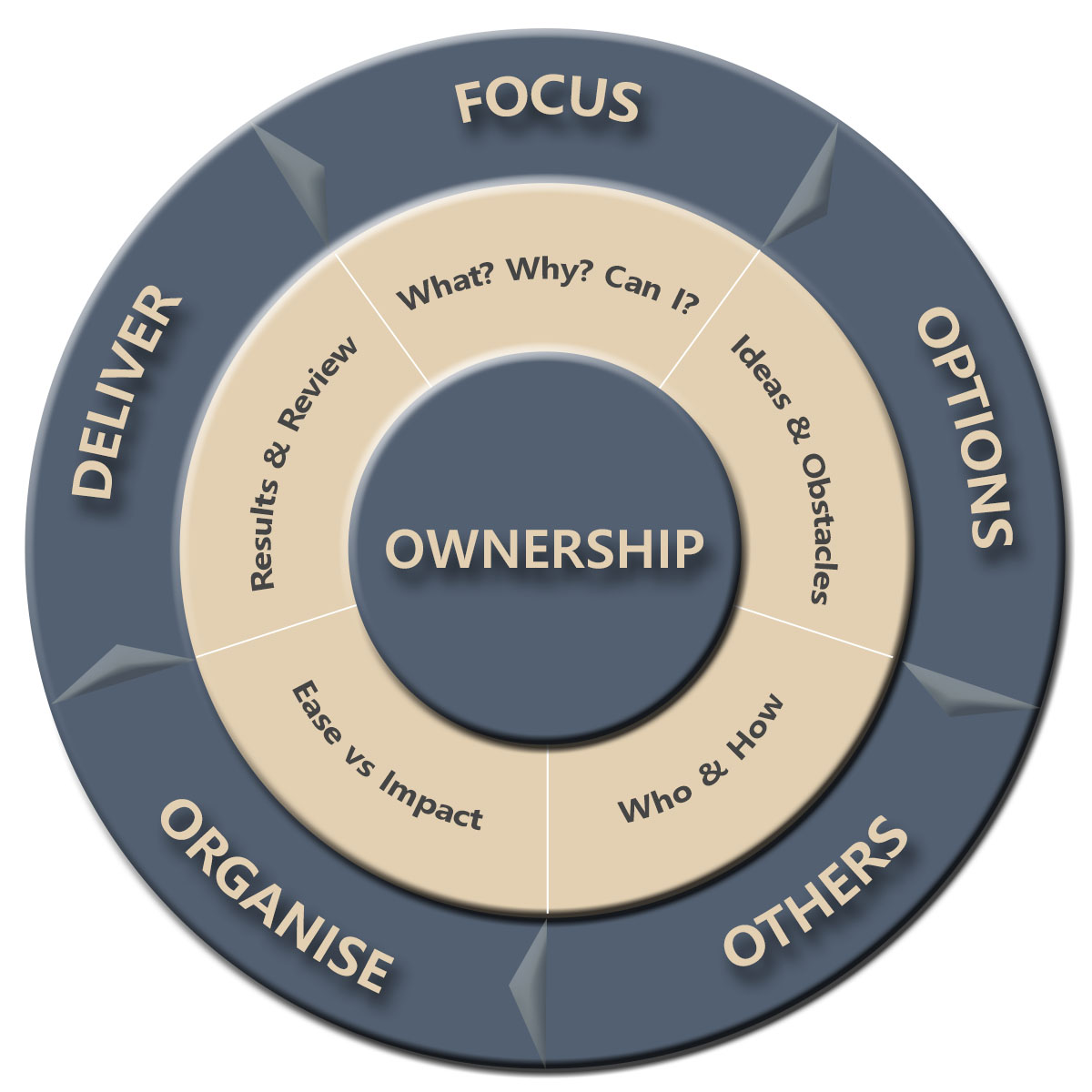
We developed a mental model for thinking, planning, reviewing, and executing everything from personal goals to large-scale projects.Our clients affectionately call FoooDo. Since its launch in 2016, FoooDo has helped teams in countless settings, from delivering multi-million-pound ROI on company-wide initiatives to identifying failing projects and stopping the financial bleeding.
Think of FoooDo as an OS:
It includes built-in psychological insights to mitigate biases and limiting beliefs.
It provides a common language and a shared approach.
It allows you to ‘plug in’ your own context, just like adding apps on your phone.
A Real-World Success Snapshot
Recently, a global manufacturing client used the FoooDo process to rescue a high-profile initiative on the brink of failure. By pausing to evaluate their assumptions (the “Others” step) and systematically exploring potential solutions (the “Options” step), they pivoted to a more viable plan, ensuring success and saving over £1 million in potential losses.
The FoooDo Framework in Six Steps
Below are the six core elements of FoooDo, each with its own psychological underpinnings:
Focus(The What)
Define precisely what you want to achieve.
Use goal-defining tools—like SMART or SMT AR (as we prefer)—to set clear targets.
Clarify your Purpose (The Why) and check your Belief (Can I?). Purpose keeps you motivated when things get tough. In terms of belief, too little and you give up; too much and complacency may set in.
Options(Unlock Possibilities)
Resist the urge to dive straight into action.
Ask creative questions and brainstorm solutions without judgment to tackle bias (such as authority bias or groupthink).
Tools in this phase ensure every voice is heard and the best ideas rise to the top.
Others(Getting the Right Support)
Goals often fail because we assume others won’t or can’t help.
Clarify what you need from each stakeholder and present compelling reasons for them to get involved.
A well-structured ask can transform “too busy” into “happy to pitch in.”
Organise(Plan and Prioritise)
Evaluate your ideas critically. Which ones make sense? Which are low effort/high impact?
Build out a timeline, address potential obstacles, and decide who owns each task.
Mitigate personal or group bias by considering multiple angles before settling on a course of action.
Delivery(Review and Adapt)
Every plan needs a formal review process to capture lessons and make mid-course corrections.
Ask: Is the goal still relevant? Do we need to stop, pivot, or continue?
Testing your confidence level ensures you’re not pushing ahead with a failing approach.
Ownership(Accountability and Mindset)
Accept accountability rather than blaming circumstances or other people.
This step is about adopting a growth mindset where failures become learning opportunities, not excuses.
Use simple benchmarks to determine whether your current reality is due to genuine challenges or self-imposed limitations.
Why FoooDo Works
FoooDo doesn’t just organise tasks—it addresses the human side of goal execution. Embedding psychology into each phase systematically counters cognitive biases that derail teams. And because it provides a consistent, team-wide “OS,” everyone can plug in their expertise without friction or confusion.
Summary: The Power of a Team OS
In today’s volatile, uncertain, complex, and ambiguous (VUCA) environment, teams are easily side-tracked by shifting priorities and internal politics. A Team OS—like FoooDo—offers:
A stable platform where work gets done effectively.
A familiar approach that reduces cognitive load and confusion.
Built-in adaptability, so you pivot quickly without starting from scratch.
Bias mitigation keeps everyone aligned on the real goal rather than personal agendas.
It frees people up to focus on what truly matters—delivering results without rework, blame games, or second-guessing.
Ready for Your Team OS?
What’s your Team OS, and how is it working for you? If you suspect there could be a better way for you and your team to plan, execute, and learn, we’re here to help. Give us a call or drop us a line, and let’s explore how FoooDo can unlock your team’s full potential.
This article first appeared on Forbes.com on 21st February 2025
Ricky has been a regular contributor to the Forbes Councils since 2023, where he shares his perspectives on all things leadership, change, culture and productivity, all with Thinking Focus’ unique perspective on metacognition, or as we prefer to say, thinking about thinking.
Here is another podcast that examines the questions that regularly arise in our work. This time, Richard and Ricky consider why managers might avoid some of the more big (difficult) conversations that are needed between manager and team members.
Often, senior managers assume that these conversations are happening, only to find out as issues escalate that a culture of over-politeness or hoping things will sort themselves out if we ignore them for long enough has sowed ambiguity and misunderstanding.
Why do these conversations feel so difficult for managers, and what can we do to ensure that they happen early, ensuring small problems never get to become critical issues?
Richard and Ricky mention a great book on structuring these challenging conversations:
Grenny J., Patterson K., McMillan R., Switzler A. and Gregory E. (2021) Crucial Conversations (Third Edition): Tools for Talking When Stakes Are High. McGraw Hill
Five tests that accountable leaders do to achieve success
Ever wondered why some managers dodge those awkward performance conversations—and what to do about it?
In this lively chat, Graham Field and Ricky Muddimer dive into the art and science of giving effective feedback that sparks real change.
They walk through seven critical tests to pinpoint the root causes of underperformance, including:
The Expectations Test – Set the ground rules upfront on how (and when) feedback is shared.
The Holy Trinity Test – Ensure crystal-clear goals, a genuine understanding of “why it matters,” and confidence in what’s possible.
The Underperformance Test – Spot gaps in knowledge, skills, environment/tools, or mindset.
The Competence Test – Move beyond “tick-box” training and guard against the Ebbinghaus Effect by reinforcing learning fast.
The Psychological Safety Test – Create a culture where people feel safe asking for help and receiving honest feedback.
If you’re a middle manager, C-suite executive, or HR professional responsible for leadership development, you’ll pick up practical tips you can use immediately. Grab a coffee, sit back, and learn how to have those tough chats that lead to better performance and stronger teams.
Our very own Ricky Muddimer was invited to be a guest speaker on this Workleap webinar. The Workleap team were keen to get Ricky’s perspective on the annual review process.
Ricky is passionate about performance. Helping line managers have a greater impact on their teams is crucial to every organisation’s performance. The relationship with your line manager is one of the key drivers of individual and team productivity.
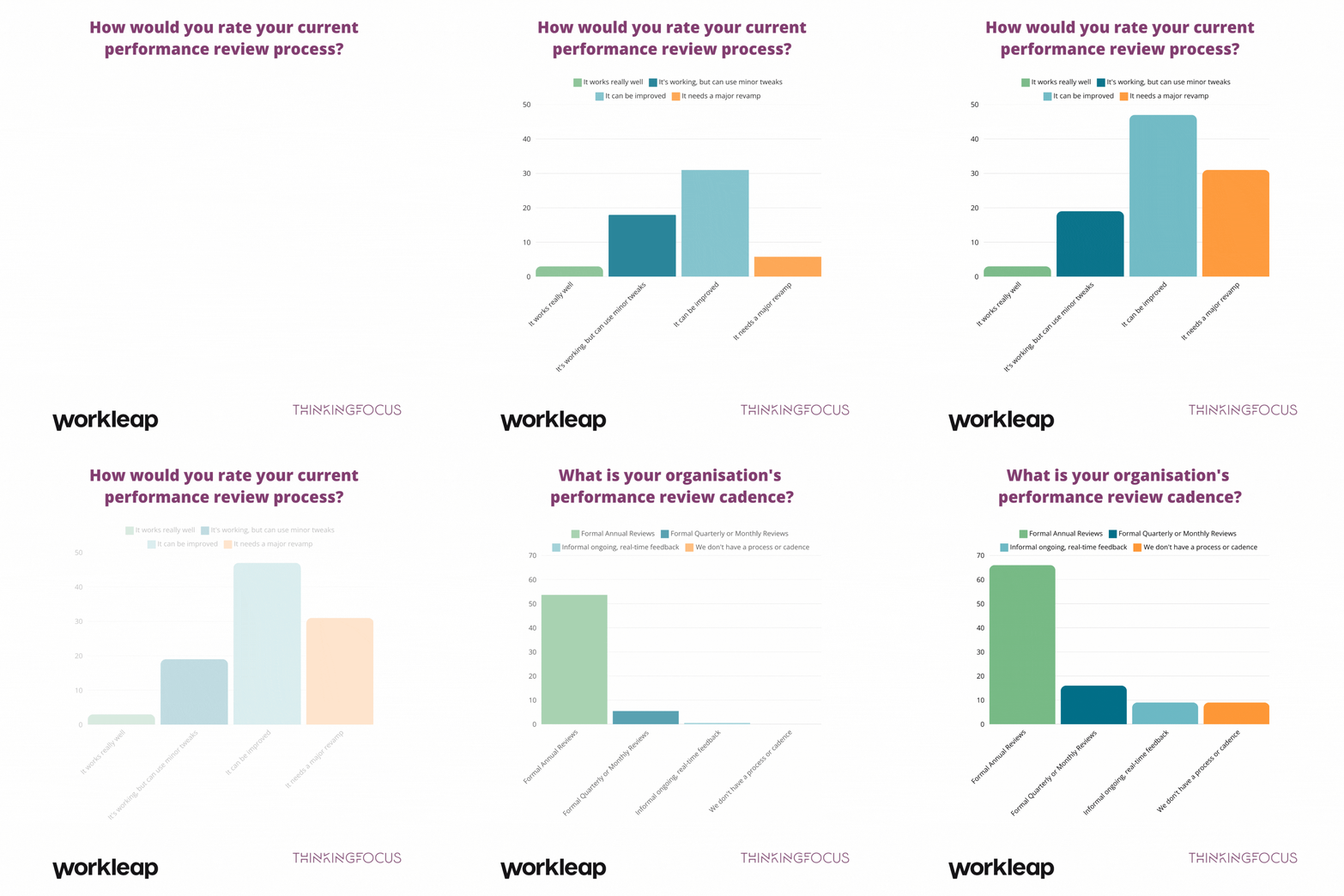
The lively discussion revealed some real insights. We learned that 78% of those polled said their review process needed improvement. At the same time, 66% were conducting a formal annual review.
Key Takeaways
We discussed how to build a culture where managers embrace performance management and do it well, and team members want time with their manager. We explored Workleap’s experience of transitioning from annual to quarterly reviews with some great hints and tips to consider.
It is arguably the most challenging time ever to be a line manager with many more leader-doers and player-coaches. How do they find the time to do everything well?
Any performance review process, at whatever cadence, needs to be simple for line managers to improve adoption and shift the mindset from task to value-adding activity.
Related Content
Watch
Unlocking the Potential: A Manager’s Guide to Addressing Underperformance
Are you struggling with underperformance in your team?
Don’t let it hold you back! In this comprehensive guide, we unpack the root causes of underperformance, the pivotal role of performance management, and your responsibilities as a manager.
Read more
Discover practical strategies to overcome roadblocks, have effective conversations, and create an environment where every team member feels valued and motivated to grow. Unlock the potential within your team and chart a course towards success.
Listen
How do you talk talent with your people (that does not set you up for a tough conversation)?
Talent conversations come in many shapes and sizes. Talent is more than just how good you are today; it also encompasses how well you fit into the plans for tomorrow. Your plans, the organisation’s plans, and their plans….
What could possibly go wrong?
Read more
Ricky and Paul tackle the conversations that leaders need to have to help the people around them understand where they are right now, what is expected of them and where they need to develop. Talent conversations may not be easy, but with a bit of structure and thought, they can be positive and constructive interactions that help people grow.
Ricky shares his five top tips for giving purposeful feedback:
Feedback: Five Top Tips for Purposeful Feedback
Feedback is one of the most critical tools and skills of any manager’s skillset.
In this video, Ricky explores five top tips for managers and leaders and includes a personal example.
Do you lay solid foundations for feedback?
Is feedback a habit?
Is it factual and founded on evidence?
Is it purposeful? Can your people do something with your feedback?
Are you present when giving feedback or distracted?
What do you think?
Related Content
Do you want to know how to deliver feedback effectively at work?
In this video, we share with you five tips on delivering effective feedback in a way that will be respectful and helpful to you and your team members.
Learning how to deliver feedback effectively is essential if you want to be a successful manager of people! In this video, we’ll show you how to deliver feedback in a way that will help your team members grow and learn. We’ll also discuss the importance of feedback in the workplace and give you some helpful tips on how to give feedback effectively!
If you prefer to listen, here are a couple of podcasts on feedback.