In this short episode of The Question Is, Ricky delves back into the library to revisit one of his favourite episodes, which also happens to be one of our most-played ever.
There are lots of slightly different versions of the meanings of the five areas in SMART goals, but the one that comes up most often with the people we work with is the ‘R’: Realistic (can you do it) or Relevant (should you do it). Even after all this time, this is still a hot topic, which is why Rob and Rich talked about it in 2017, and Ricky decided to focus on it for the first of our revisited series.
In this last podcast in our series on common thinking errors, Richard and Graham look at how we assign labels to ourselves and to others and then act as if these made-up labels are true.
While labels can help us to understand the world by generalising things into simple to understand categories, often we assign labels about our abilities, experiences, identity and personality that are more of a reflection of a situation than they are of us.
Richard walks Graham through how we can explore these labels we create and reframe them to focus on behaviours that we can change if we wish, and not our identity. Seeing something as an area we are learning is always more constructive than something you are not good enough to do.
We have a habit of only seeing the evidence that supports our view of the world. When stuff happens we can focus on the bits that help us to confirm what we already believe, regardless of how much the evidence is stacked against us. When this perspective collides with unhelpful beliefs or negative self-image, then we start to Discount The Positives, another common thinking error that many of us do from time to time.
In this episode, Graham and Paul explore how this trait that starts off sounding like humility can quickly undermine our own self-confidence and lead to us believing our success is luck while our failures represent our own inadequacies. A sports star who puts their win down to their opponent’s bad day, or a salesperson who believes their current run of luck is down to market conditions misses the point, that while we can all be lucky, the hard work learning and practicing, as well as showing up each day and putting in the graft, was most likely behind all of that so called luck!
As we continue to explore the common thinking errors, the little trip-ups in the way that we think, our episode this time explores Personalisation. Personalisation happens when we blame ourselves for things that are really outside our control. We did not plan this episode for our Christmas one, but what a lucky coincidence, as you may experience a little of this over the next few days, so it might be worth understanding what is going on.
Graham and Paul dig into what causes us to take the normal to and fro of life and sometimes find meaning and slight on ourselves that was never there, or a least never intended in that way. How criticism of a project or piece of work can feel like criticism of us, or the people around you laughing are almost certainly not laughing at you.
So this Christmas break, the weather is not down to you, and unless you really are one of the few people who decide what is going to be shown on the telly, the fact that there are 200 channels and nothing on, well, that is not your fault either!
One of the common thinking errors we encounter revolves around ‘should’ and ‘must’ statements that we say to ourselves, creating high demands on how the world needs to be, when the world has not agreed to our demands. Often, we don’t need to operate anywhere near that level to be successful.
If you carry around the invisible rule book of your own standards, ticking off each day where you fail to live up to impossible expectations, and the world conspires to frustrate you. This podcast in our series on thinking errors will be of interest. Richard and Graham explore how, by changing should to could, and I must to I would prefer it if, we can give ourselves more scope to move forward in an uncertain world.
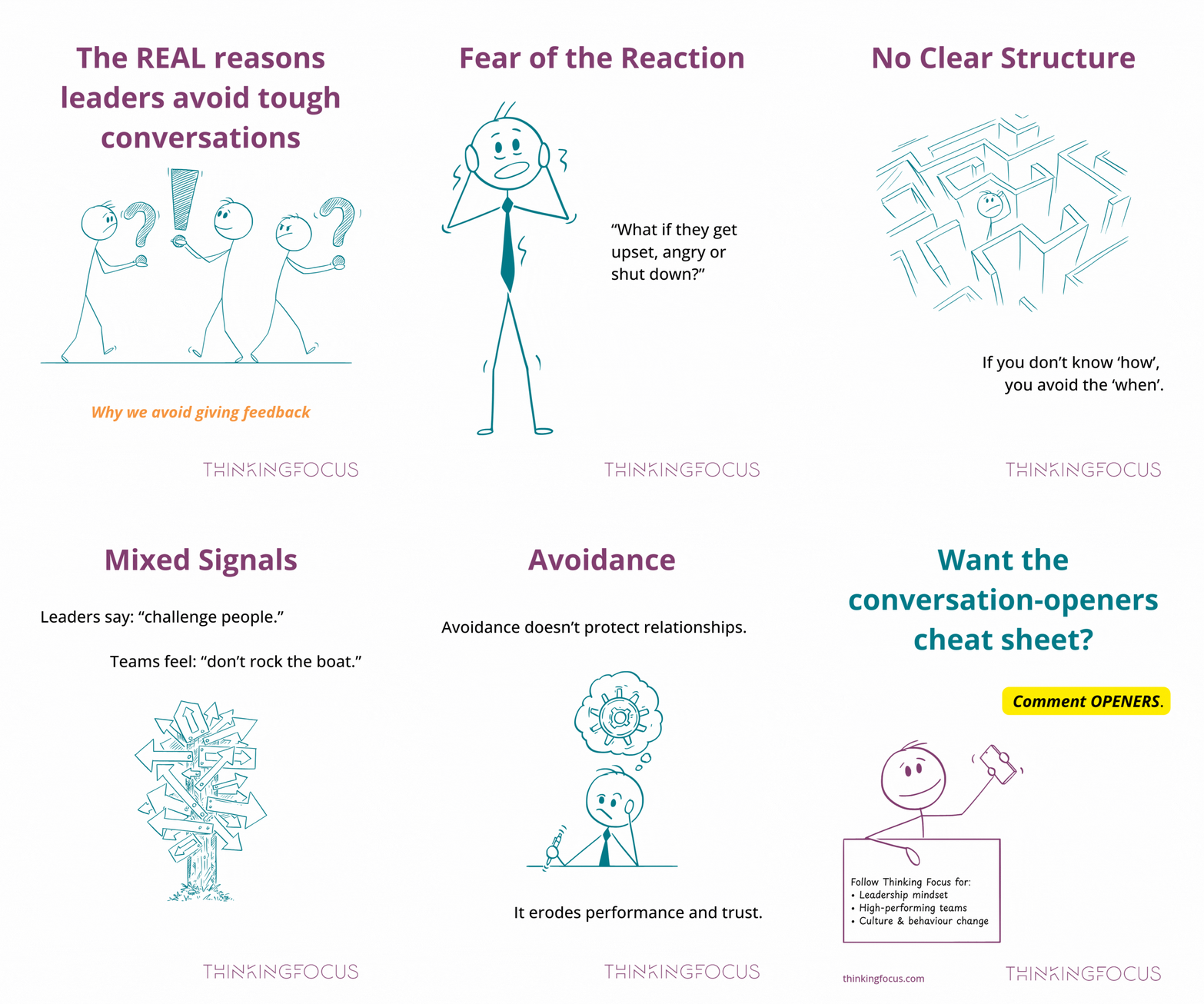
Most leaders don’t avoid tough conversations because they lack courage. They avoid them because they don’t feel equipped to handle them.
Since my last carousel exploded on LinkedIn, I’ve read the comments, messages, and DMs… and a clear pattern is emerging. I’ve sent our countless one-page manager’s guides and am now developing a full-on Feedback Guide for Leaders.
Add your information in the contact us section if you want a copy when it’s ready.
Here are the 5 real reasons leaders avoid behavioural feedback:
1️⃣ Fear of the reaction “What if they get emotional, upset, angry, or shut down?”
2️⃣ Fear of getting it wrong “I don’t want to make it worse.”
3️⃣ Not having a clear model or structure When you don’t know how to have the conversation, you avoid it.
4️⃣ Mixed cultural signals Leaders say: “Challenge people.” Teams feel: “Don’t rock the boat.”
5️⃣ Past experience One messy conversation years ago is enough to create hesitation now.
Here’s the truth:
Avoidance doesn’t protect relationships. It erodes performance, trust and engagement.
To help leaders and managers take that difficult first step and get the conversation started, we’ve created a cheat sheet with 7 ways to open the conversation. We share it with them in workshops to add to their toolkit.
As we continue our series of podcasts on common thinking errors, in this podcast, Ricky and Richard make up stuff. Well, to be honest, I just made that up because this is a great podcast and I was not part of it! This is emotional reasoning, and if you listen to this podcast, they will introduce you to this common thinking error that we can all make from time to time.
Emotional Reasoning is where our mind mixes up who we feel about something (or someone) and the supporting facts about that situation or person. If you have ever had a bad meeting and started to think that represents the capability of your team, or decided that a new project that is all new and sexy, but has very little detail, is bound to be better than the current project, where you understand all of the complexity and issues, you have fallen prey to emotional reasoning. Listen in while Ricky and Rich help you take back control and see things as they are, not how they feel…
Coaching can be one of the most rewarding conversations you ever have with someone — even when it starts with a call out of the blue asking for help.
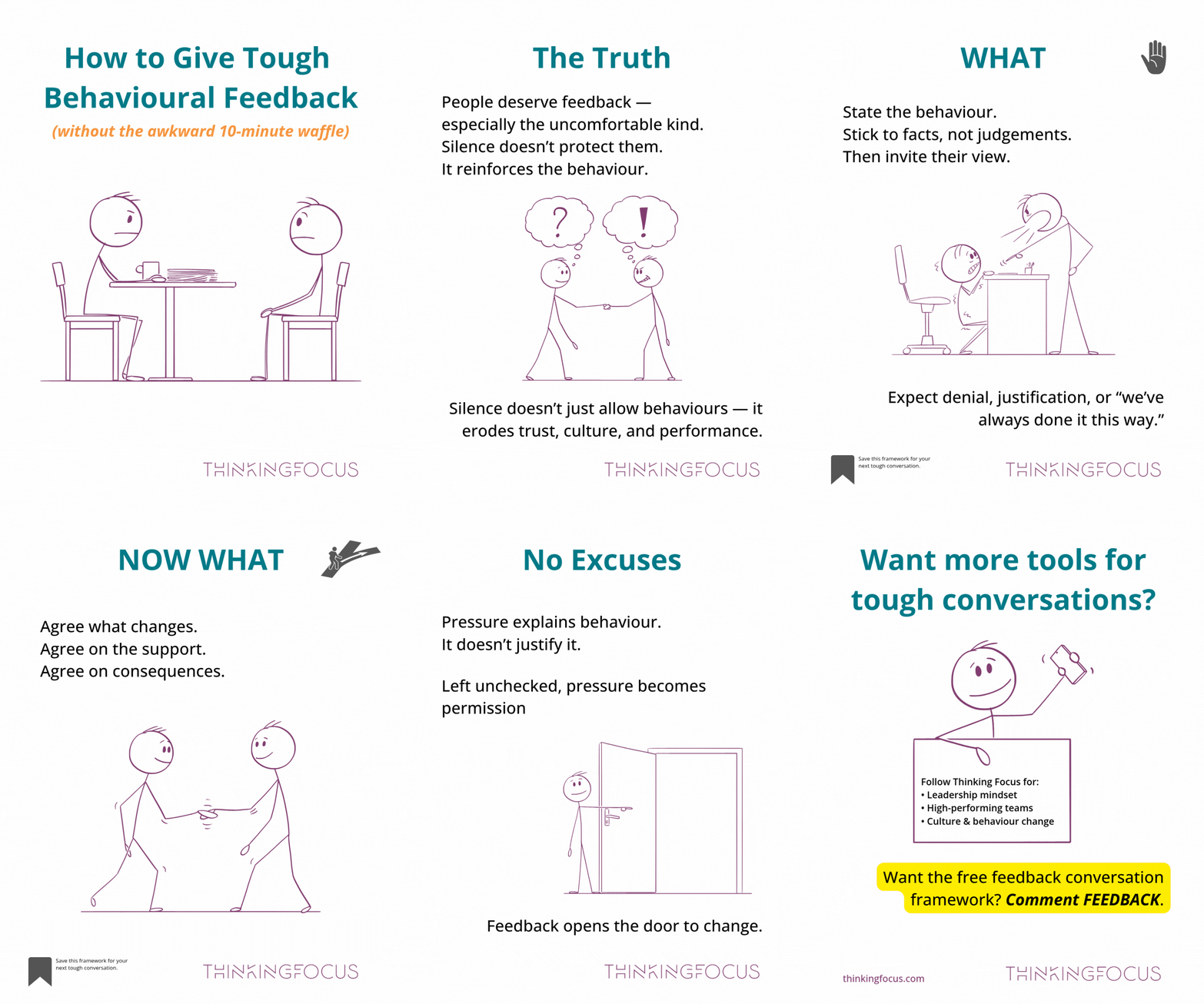
One of the toughest things leaders face is giving behavioural feedback to someone who has fallen short of the standard. And often, you’re only giving it because everyone else has ducked the job.
Not because they don’t care — but because they don’t have the skills, the confidence, or the nerve to handle whatever reaction comes back.
I get it. I’m usually the one people call when the conversation feels too big or too risky. I know what it’s like to deliver the message others are scared to give… and I know what it’s like to take someone who reacts badly and help them become a high-performing leader.
So when an HR Director rang to sense-check how they should tackle a difficult team leader — someone creating pressure, fear, and a steady stream of people eyeing the exit — I was happy to help.
No one should feel like that at work.
Here’s what I shared with them.
1. People deserve feedback — even the uncomfortable kind.
Don’t dance around it.
Tell them upfront you have feedback they’re not going to like. That honesty is kinder than ten minutes of waffle.
2. Use “What, So What, Now What” — simple and effective.
WHAT: Stick to specifics and facts, not judgments.
Then invite their view. Expect denial, justification, or “that’s how we’ve always done it.”
If no one has ever challenged them before, of course, they think it’s OK.
You promote what you permit.
SO WHAT: Explain the impact. Poor behaviour doesn’t stay contained — it drives disengagement, withdrawal, and anonymous resignations. Someone else inherits the mess, and the cycle continues.
NOW WHAT: Agree on what needs to change and what happens if it doesn’t.
A few weeks later, I checked in. The HR Director said the conversation didn’t feel great, but it was absolutely necessary.
And here’s the twist: the team leader was under huge pressure and didn’t realise the effect they were having. They’d operated like this for years because no one had ever stopped them.
Top performers often get a free pass because leaders fear losing their output.
We create stories that justify our inaction.
Yes, there were mitigating factors — but never excuses.
Feedback opened the door for this person to ask for support, seek help, and commit to changing.
And here’s the important bit:
A single conversation doesn’t transform ingrained habits. Especially ones we’ve allowed to calcify through silence.
But it does create a catalyst.
If you want that change to stick:
• Support them consistently
• Reset expectations with the team
• Give the team permission to hold their leader to account
• Ensure the leader has an outlet — a safe space to vent and process pressure
Because isolation makes pressure heavy. And pressure makes behaviour worse.
Real leadership isn’t avoiding the hard message.
It’s delivering it with honesty, clarity, and humanity — and sticking around to help someone become who they want to be.
As we continue our series on common Thinking Errors, this episode considers the way that sometimes we jump to conclusions with minimal evidence and no facts.
Ricky and Paul explore the different ways we see this playing out, taking examples from sport where commentators take stats from 20 years ago to tell us who is going to win, without anyone pointing out that there are very few sportspeople who were playing 20 years ago playing today, so it is not the same team!
If you are prone to making leaps in your logic, jumping to conclusions that don’t help you or move you forward, ask yourself when you do have a conclusion;
Where is the Evidence?
What Alternative explanations might there be?
What are the Implications of this?
How Useful is this line of thinking?
These four vowels (E A I U) prevent you from getting to Ohh, I got that wrong.
If you have ever had one bad thing happen, and suddenly cannot remember everything good that happened before, then this podcast is for you. In this episode, Graham asks Paul about he common thinking error, Mental Filtering.
Our brains are designed to sort through all of the information presented to us quickly and then focus on the areas that present danger or risk. It is doing its primary job of keeping us alive long enough to pass on our genes! Yet, in a modern world, we are not really at risk, so occasionally this amazing trick backfires and makes us hyper-focused on the challenge as if it is life and death, without adding the context of everything else that is going on.
Paul and Graham discuss why this happens, and most importantly, how you can bring balance and perspective back into your thoughts, to allow you to see problems and challenges for what they are, and remember all of the experience you are bringing to them.